 +91 8130134693
 info@sbaestheticsclinic.com


 +91 8130134693
 info@sbaestheticsclinic.com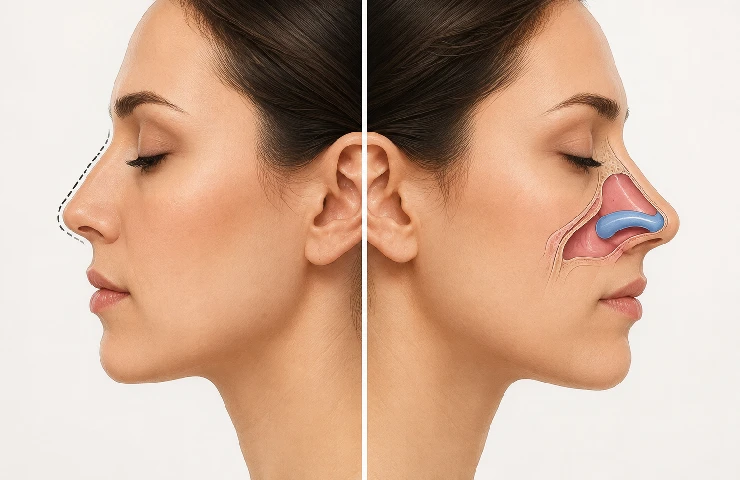
Rhinoplasty vs Septoplasty: Understanding the Difference
 By Dr. Shilpi Bhadani
 August 14, 2026
The nose plays a vital role in both facial aesthetics and breathing. While some individuals seek surgery to improve the appearance of their nose, others require treatment to correct structural issues that affect nasal function. This often leads to confusion between two commonly performed nasal surgeries - rhinoplasty and septoplasty.
Although both procedures involve the nose, they are performed for entirely different reasons. Rhinoplasty primarily focuses on enhancing the shape and appearance of the nose, whereas septoplasty aims to improve breathing by correcting a deviated nasal septum. Understanding the difference can help patients make informed decisions about the treatment they truly need.
At SB Aesthetics, Dr. Shilpi Bhadani, an experienced plastic and reconstructive surgeon, offers personalised evaluation and treatment for both cosmetic and functional nasal concerns. Every procedure is planned after a thorough assessment of the patient's facial anatomy, nasal structure, breathing function, and aesthetic goals to achieve natural-looking and balanced results.
What is Rhinoplasty?
Rhinoplasty, commonly known as a nose reshaping surgery or nose job, is a cosmetic surgical procedure performed to improve the appearance, proportion, and symmetry of the nose. It may also address minor functional concerns while enhancing overall facial harmony.
The purpose of rhinoplasty includes:
- Improving facial balance
- Reshaping the nasal bridge
- Refining the nasal tip
- Correcting nasal asymmetry
- Reducing or increasing nose size
- Correcting deformities caused by injury
- Enhancing overall facial aesthetics
What is Septoplasty?
Septoplasty is a functional nasal surgery performed to straighten a deviated nasal septum - the wall of cartilage and bone that separates the two nasal passages.
When the septum is significantly deviated, it can obstruct airflow, leading to breathing difficulties and other nasal problems. Septoplasty focuses solely on restoring proper nasal function rather than changing the external appearance of the nose.
The purpose of septoplasty includes:
- Improving nasal airflow
- Correcting a deviated septum
- Reducing nasal blockage
- Improving breathing during sleep
- Decreasing recurrent sinus infections
- Enhancing overall nasal function
Common Reasons for Rhinoplasty
Patients choose rhinoplasty for a variety of cosmetic and reconstructive reasons, including:
- Crooked nose
- Prominent dorsal hump
- Wide nasal bridge
- Bulbous nasal tip
- Drooping nasal tip
- Uneven nostrils
- Nose that appears too large or too small
- Previous nasal injury
- Congenital nasal deformities
- Desire for better facial harmony
Common Reasons for Septoplasty
Septoplasty is recommended when a deviated septum begins affecting daily life.
Some common reasons include:
- Persistent nasal blockage
- Difficulty breathing through one or both nostrils
- Chronic sinus infections
- Frequent nosebleeds
- Snoring caused by nasal obstruction
- Poor sleep quality
- Facial pressure due to impaired sinus drainage
- Headaches related to nasal obstruction
When is Rhinoplasty Recommended?
Dr. Shilpi Bhadani may recommend rhinoplasty for patients who:
- Are unhappy with the appearance of their nose
- Wish to improve facial balance
- Have completed facial growth
- Have realistic expectations
- Want correction after trauma
- Require revision of a previous rhinoplasty
- Are in good general health
Rhinoplasty is often chosen when cosmetic enhancement is the primary goal.
When is Septoplasty Recommended?
Septoplasty is generally advised for individuals who experience functional problems due to a deviated septum.
It may be recommended when patients:
- Have difficulty breathing through the nose
- Experience chronic nasal obstruction
- Develop repeated sinus infections
- Suffer from persistent nasal congestion
- Have sleep-related breathing difficulties
- Do not respond adequately to medications
- Experience frequent nosebleeds due to septal deviation
Rhinoplasty vs Septoplasty - Key Differences at a Glance
| Feature | Rhinoplasty | Septoplasty |
|---|---|---|
| Primary Goal | Improve nose appearance | Improve breathing function |
| Why Patients Choose It | Cosmetic enhancement and facial harmony | Relief from nasal obstruction |
| Insurance Coverage | Usually not covered when cosmetic | May be covered if medically necessary (subject to policy terms) |
| Surgical Approach | Reshapes external nasal structures | Corrects the internal nasal septum |
| Recovery Time | Longer due to external swelling | Generally shorter with faster functional recovery |
How is Rhinoplasty Performed? Step-by-Step Procedure
Although every procedure is customised, rhinoplasty generally follows these steps.
Step 1: Consultation and Planning
The nose is carefully evaluated, photographs are taken, and surgical goals are discussed.
Step 2: Anaesthesia
General anaesthesia is usually administered for patient comfort.
Step 3: Surgical Incisions
Depending on the technique, an open or closed rhinoplasty approach is used.
Step 4: Reshaping the Nose
The surgeon carefully reshapes the bone, cartilage, or soft tissues to achieve the desired contour.
Step 5: Structural Support
If required, cartilage grafts may be used to strengthen and support the nasal framework.
Step 6: Closure
Incisions are meticulously closed, and a nasal splint is applied to protect the new shape during healing.
How is Septoplasty Performed? Step-by-Step Procedure
Septoplasty focuses on correcting the internal nasal structure.
Step 1: Clinical Assessment
The septal deviation is examined, often with nasal endoscop
if needed.
Step 2: Anaesthesia
Local or general anaesthesia is administered depending on the complexity.
Step 3: Internal Incision
An incision is made inside the nostril, leaving no visible external scar.
Step 4: Septum Correction
The surgeon lifts the mucosal lining and carefully repositions, trims, or reshapes the deviated cartilage and bone.
Step 5: Septum Stabilisation
The corrected septum is repositioned in the centre of the nose.
Step 6: Closure
Internal stitches are placed, and nasal splints may be used temporarily to support healing.
Candidate Differences: Rhinoplasty vs Septoplasty
| Rhinoplasty | Septoplasty |
|---|---|
| Individuals seeking cosmetic improvement | Individuals experiencing breathing difficulties |
| Patients unhappy with nose shape or size | Patients with a diagnosed deviated septum |
| Those wanting improved facial symmetry | Those with chronic nasal obstruction |
| Patients with realistic aesthetic goals | Patients with functional nasal problems |
| Healthy individuals with stable expectations | Patients whose symptoms persist despite medication |
Recovery Timeline: Rhinoplasty vs Septoplasty
| Recovery Stage | Rhinoplasty | Septoplasty |
|---|---|---|
| First Week | Swelling, bruising and splint removal | Mild swelling and congestion |
| Weeks 2–3 | Bruising largely resolves; swelling begins to reduce | Most patients resume normal activities |
| Weeks 4–6 | Improved nasal appearance with decreasing swelling | Breathing continues to improve |
| 3–6 Months | Significant refinement becomes visible | Internal healing continues |
| 12 Months | Final nasal shape is achieved | Complete healing of the septum is typically established |
While septoplasty patients often notice breathing improvements within a few weeks, rhinoplasty patients require more time for swelling to fully settle and reveal the final aesthetic outcome.
Can Rhinoplasty and Septoplasty Be Performed Together?
Yes. In many cases, rhinoplasty and septoplasty are performed during the same surgery in a procedure often referred to as septorhinoplasty.
This combined approach is beneficial for patients who wish to improve both the appearance and function of their nose simultaneously. For example, someone with a crooked nose caused by trauma may also have a deviated septum affecting their breathing. Combining both procedures allows the surgeon to restore nasal function while enhancing facial aesthetics in a single operation.
Under the expertise of Dr. Shilpi Bhadani, a combined procedure is carefully planned to ensure that cosmetic refinement does not compromise breathing—and vice versa. Performing both surgeries together also means a single anaesthesia session and one recovery period, making it a convenient option for suitable candidates.
Expert Nose Surgery with Personalised Care at SB Aesthetics
Whether your concern is improving facial aesthetics, correcting breathing difficulties, or addressing both, choosing the right surgeon is one of the most important decisions you can make. Nasal surgery requires a deep understanding of both facial harmony and the intricate anatomy of the nose to achieve results that look natural and function effectively.
At SB Aesthetics, Dr. Shilpi Bhadani combines advanced surgical expertise with a patient-centric approach to deliver customised treatment plans tailored to each individual's needs. Every consultation includes a detailed assessment of nasal structure, facial proportions, and functional concerns to determine the most appropriate surgical option.
If you're considering rhinoplasty, septoplasty, or a combination of both, schedule a consultation with Dr. Shilpi Bhadani at SB Aesthetics. A personalised evaluation can help you understand your options and choose the treatment that best supports your aesthetic goals, breathing function, and long-term confidence.

Dr. Shilpi Bhadani
MBBS, MS - General Surgery, MCh - Plastic & Reconstructive Surgery,
DAFPRS Fellowship in Aesthetic Surgery


Request An Appointment
Recent Blog Posts
Medical Visa, Consultation, Surgery and Recovery: What to Prepare Before Coming to India
October 3, 2026
What Is Eyelid Surgery? Everything You Need to Know
August 24, 2026
Mini Facelift vs Full Facelift: Which One Is Right for You?
August 20, 2026
Rhinoplasty vs Septoplasty: Understanding the Difference
August 14, 2026

SB Aesthetics is one of the renowned medical centers in Gurgaon offering world-class and most advanced plastic surgeries procedures under the guidance of Dr. Shilpi Bhadani.
Request An Appointment
Last reviewed: June 2026
Medically reviewed by Dr. Shilpi Bhadani.
Copyright © 2021-2026, SB Aesthetics. All Rights Reserved. Powered by DigiLantern


