 +91 8130134693
 info@sbaestheticsclinic.com


 +91 8130134693
 info@sbaestheticsclinic.com

Medical Weight Loss in Gurgaon: From Your First Assessment to Long-Term Weight Management
 By Dr. Shilpi Bhadani
 November 10, 2026
A medical weight-loss plan should explain more than how much weight you hope to lose. It should establish what needs attention in your health, which treatment options are appropriate and how the plan will be reviewed over time. For adults looking for care in Gurgaon, that means understanding what medical assessment and continuing support involve before choosing a particular medicine or package.
It is easy to arrive at a consultation with a number in mind. Perhaps it is a weight you remember, a figure on a report or a target suggested by someone else. Bring that thought with you. Also consider the questions behind it: what has changed, what is difficult now and what would you like treatment to help you do?
The World Health Organization describes obesity as a chronic disease shaped by interacting biological, social, environmental and behavioural factors. A useful conversation leaves room for that complexity without making you feel that you must solve everything before seeking help.
Medical weight loss, at a glance: Medical weight management is a clinically supervised approach to managing excess weight and related health concerns. It generally begins with a review of your weight history, medical conditions, current medicines and everyday habits. Depending on the findings, treatment may involve nutritional support, physical activity, behavioural interventions and, where appropriate, prescription medication. Follow-up helps determine whether the plan is working and needs adjustment.
What medical weight loss involves
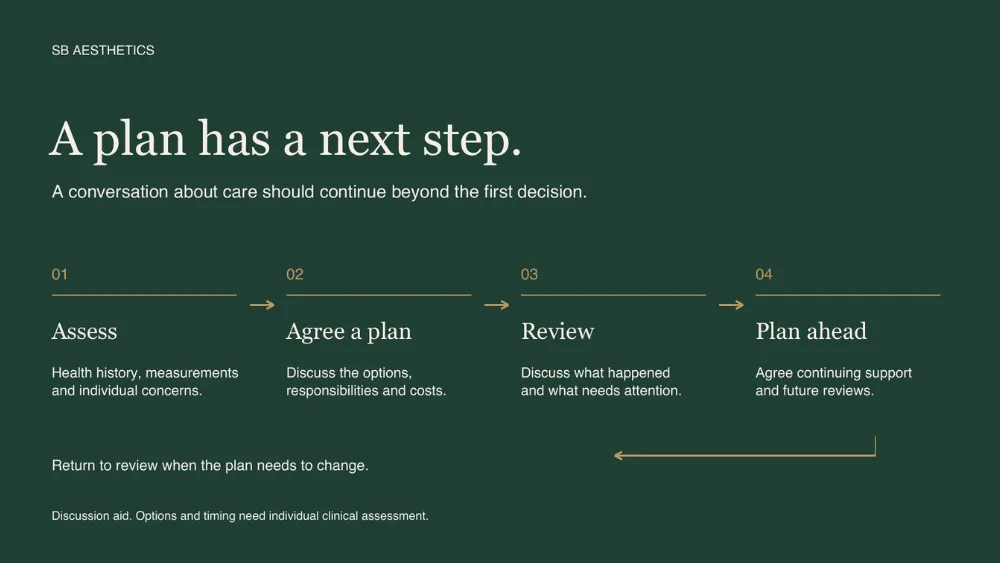
Medical weight management is care guided by an assessment of your health and circumstances. It can involve nutrition, physical activity and support with habits, with prescription medicines or metabolic and bariatric surgery considered when appropriate. These options are not a fixed sequence that everyone must complete.
Unlike a standard diet plan, medical weight management can account for health conditions, medications and other factors that influence weight. It also provides a way to evaluate whether treatment is helping and what should change if progress becomes difficult.
The professionals involved depend on the patient's needs. A qualified medical practitioner assesses the health concerns and treatment options, while a dietitian or another relevant specialist may contribute to ongoing care. When medication is considered, prescribing and follow-up should remain under an appropriately qualified clinician.
The goal is not simply to reach a number on the scale. Appropriate weight reduction may also improve certain weight-related health conditions and everyday functioning. The benefits and realistic goals differ between individuals.
When should you see a doctor for weight loss?
You do not have to wait until weight becomes a severe problem or exhaust every diet before discussing it with a doctor.
Medical assessment may be worthwhile if you have repeatedly regained weight, find previous approaches difficult to sustain or have concerns such as high blood pressure, type 2 diabetes or sleep apnoea. You may also want to understand whether medically supervised treatment could help when self-directed efforts have not produced the results you need.
A consultation does not automatically mean medication or surgery. Its purpose is to establish whether your weight is affecting your health, identify concerns that need attention and determine which treatment approaches may be appropriate.
What to take to your first assessment
You do not need a perfect food diary or a persuasive explanation for every previous attempt at weight loss. An honest account is more useful. Make a short note of how your weight has changed and the approaches you have tried, including anything that helped for a while or was difficult to continue.
Bring your current medicine and supplement list, recent relevant reports and details of diagnosed conditions. Mention sleep problems, changes in appetite and anything about eating that worries you. Sleep, certain medicines, health conditions and family history can all affect weight. Do not stop an existing prescription because you suspect it contributes; ask the treating clinician to review it.
It may also help to describe what a normal working day looks like. For someone commuting across Gurugram, lunch may depend on a canteen and dinner on when they get home. Someone else may cook for a whole household or work shifts. These details help the clinician understand which changes might be practical and sustainable.
Choose one or two priorities to explain in your own words. You might want help understanding a health concern, managing a pattern of weight regain or finding an approach you can continue.
By the end of the assessment, you should have a clearer understanding of the main concerns being addressed, the available treatment options and the next steps. Some patients may begin with changes to nutrition and activity. Others may need further investigations, treatment of an associated condition or consideration of additional medical options.
What should the clinician assess beyond body weight?
Weight and body mass index, or BMI, provide useful information, but they need context. BMI relates weight to height; it cannot, by itself, describe your complete health or determine which prescription is appropriate.
An initial medical weight-loss assessment may consider several factors:
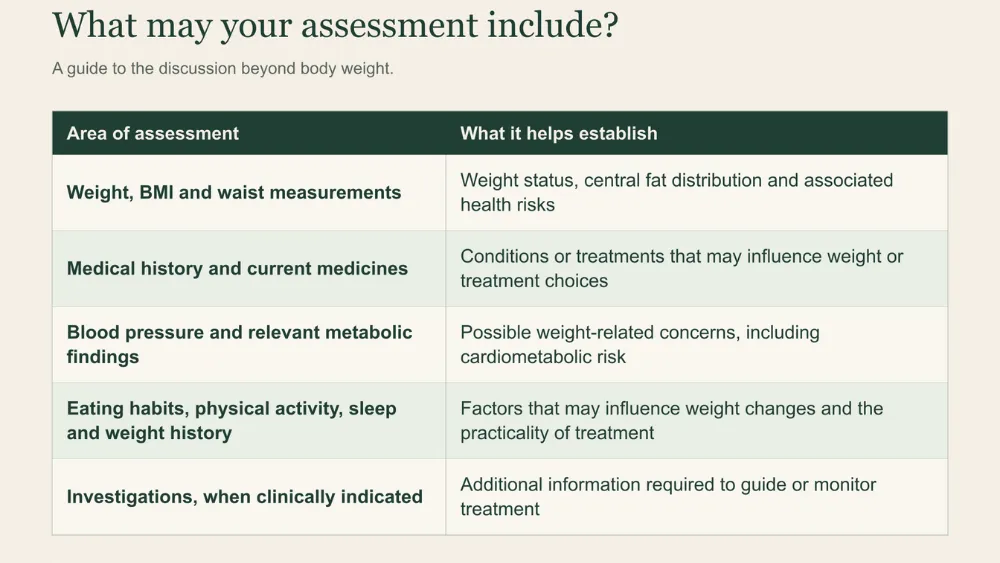
The exact assessment varies according to the person's medical history, examination and health concerns. Not everyone requires the same investigations.
This is particularly relevant for Indian patients. The Endocrine Society of India's 2025 obesity guidelines recognise the importance of assessing obesity-related health risks in the Indian population. International guidance, including NICE recommendations, also recognises that people of South Asian backgrounds may experience cardiometabolic risk at lower BMI values.
These considerations help doctors interpret measurements in context. They do not mean that everyone with a particular BMI requires medication.
If investigations are recommended, the clinician should explain what they are intended to establish and how the results may influence the treatment plan. A useful assessment connects the findings to decisions rather than simply producing a list of numbers.
Your first assessment, at a glance
- Assessment: Understand weight history, medical conditions and relevant health findings.
- Care planning: Identify suitable treatment approaches, goals and responsibilities.
- Follow-up: Review progress, tolerability and whether the plan needs adjustment.
This sequence describes the general purpose of medically supervised care. The actual pathway depends on the individual and the provider.
What does a personalised medical weight-loss plan include?
A personalised plan combines the findings of the initial assessment with treatment options that suit the person's health, preferences and circumstances.
For many people, nutrition, physical activity and behavioural support form an important foundation. Some may also benefit from prescription medication or assessment for other treatments. The appropriate combination depends on clinical findings rather than a standard package offered to everyone.
Nutrition that fits your everyday life
A nutrition discussion can begin with the food you already eat. The ICMR–National Institute of Nutrition's Dietary Guidelines for Indians support dietary variety, including whole grains, pulses and locally available vegetables. The amounts and combinations appropriate for you still need individual advice.
Whether you eat vegetarian food, share meals with family members or have a limited food budget can all influence how a plan is developed. Advice is easier to follow when it accounts for ingredients you can obtain and meals you realistically have time to prepare.
For example, rather than leaving with the instruction to “eat better”, a patient might work with a qualified professional to adapt their usual breakfast or office lunch. The changes should have a clear purpose and be practical enough to continue beyond the first few weeks.
Medical nutrition support may also address the adequacy of protein and other nutrients, particularly when someone is losing weight rapidly or eating substantially less than before.
Physical activity and other habits
Activity needs the same attention to circumstances. Pain, mobility limitations, long periods of sitting or difficulty finding a suitable place to exercise may affect where someone begins.
An appropriate activity plan considers current fitness, medical conditions and individual capability. The starting point need not be an ambitious exercise schedule.
Sleep, work patterns and difficulties maintaining previous changes may also need attention. Rather than treating these factors as separate failures, a supervised plan can address them as part of the overall weight-management process.
The first version of a plan will not necessarily be the final one. Recommendations may be adjusted as the clinician learns more about the patient's response, preferences and changing circumstances.
Where prescription medicines may fit
Prescription medicine may form part of a clinician-led weight-management plan. Some medicines used in obesity care act on pathways involved in appetite and fullness, helping selected patients reduce food intake. They are generally considered alongside appropriate nutrition and activity support rather than as a replacement for comprehensive care.
The decision depends on the person's medical history, weight-related health concerns, other treatments, the proposed medicine and its approved indication.
The Endocrine Society of India's 2025 guideline update emphasises counselling about benefits, limitations, adverse effects and cost before and during anti-obesity medication use.
A prescribing consultation should establish why a particular treatment is being considered, what benefit may reasonably be expected, which risks require attention and how the patient's response will be evaluated.
Pregnancy, breastfeeding, plans for pregnancy and existing medicines are among the considerations that may affect treatment selection. Different products have different indications, restrictions and monitoring requirements.
In India, patients should receive treatment based on the applicable regulatory approvals and the judgement of an appropriately qualified prescribing clinician.
This article does not establish eligibility for a particular injection or provide dosing instructions. Those subjects require individual medical assessment.
What follow-up should help you understand
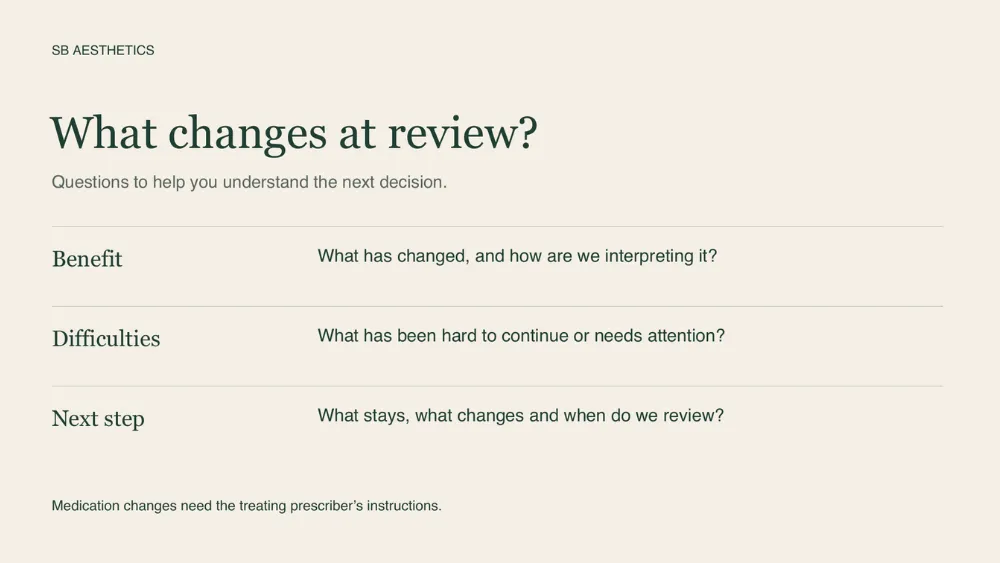
Follow-up is an important part of medical weight management because treatment decisions may need to change as the patient responds.
A review can consider whether the plan is manageable, how weight and relevant health indicators are changing, whether new symptoms have appeared and whether any treatment is producing unacceptable adverse effects.
The measures followed will depend on the patient's original health concerns. Weight may be one indicator, but blood pressure, metabolic findings, physical function and the practical burden of treatment may also contribute to the assessment.
For patients using prescription medication, follow-up also provides an opportunity to review benefit and tolerability. Medication adjustments should be made by the responsible prescriber, not independently by the patient.
A review may result in continuing the current approach, adapting it, arranging further assessment or reconsidering a treatment option.
Patients should understand the reason for any change, what to expect next and whom to contact if a problem arises between appointments.
Why maintenance belongs in the first conversation
Long-term planning is easier to discuss before a short course or package has ended.
Weight management does not necessarily finish when someone reaches a target weight. Appetite, health conditions, activity levels and everyday routines may change. Maintaining progress can require continuing attention to nutrition, activity and medical care.
The National Institute of Diabetes and Digestive and Kidney Diseases explains that the duration of prescription weight-management treatment depends on benefit and tolerability, and that weight regain can occur after medication is discontinued.
This does not mean everyone must remain on a particular medicine indefinitely. It means that treatment changes and discontinuation should be discussed with the prescriber as part of a longer-term plan.
Maintenance also needs to account for ordinary life. Work travel may increase, schedules may change or financial circumstances may affect access to treatment.
A sustainable plan anticipates such changes rather than relying on an ideal routine that is difficult to maintain.
How to compare weight-management care in Gurgaon
For patients looking for medical weight-loss treatment in Gurgaon, the quality of an assessment and the arrangements for continuing care deserve as much attention as the headline price.
A qualified provider should be able to explain who is responsible for medical assessment, what treatment options are available, whether nutrition support is included and how progress will be reviewed. If you are already receiving treatment for another medical condition, the care plan may also require coordination with your existing doctor.
The NIDDK's guidance on choosing a weight-loss programme recommends looking for realistic goals, ongoing support and a maintenance plan. Be cautious of promises of rapid or guaranteed results before a provider has assessed your health.
What does medical weight-loss treatment cost in Gurgaon?
The total cost can vary according to the type of care required and the duration of treatment.
An initial consultation may be charged separately from investigations, nutrition counselling, prescription medicines and follow-up appointments. Some providers offer packages, while others charge for individual services.
A useful quotation makes these components clear, including which expenses are optional, which may recur and what happens if the treatment plan changes.
Comparing only the advertised package price may not reveal the overall cost of ongoing medical care.
How this differs from liposuction and body contouring
Medical weight management and body contouring address different concerns.
Medical weight-loss treatment focuses on reducing excess weight and managing associated health risks. Liposuction, by contrast, removes localised fat deposits to improve body contour.
Even after substantial weight loss, a person's body shape may not change in the way they expected.
Some people experience excess skin around the abdomen, thighs or arms. Others notice changes in breast shape, facial volume or the proportions of different body areas. These changes may reflect skin elasticity, fat distribution and tissue support rather than remaining excess weight alone.
This is where the distinction becomes important.
The amount of weight someone has lost does not, by itself, determine whether body-contouring surgery would be appropriate. The surgeon must consider the patient's anatomy, remaining skin and tissue, weight stability, health and expectations.
For some people, the appropriate recommendation is to allow more time for weight to stabilise. Others may benefit from a non-surgical approach or, where clinically appropriate, a surgical procedure. Many will not need an aesthetic intervention at all.
At SB Aesthetics & Plastic Surgery Hospital in Gurugram, Dr. Shilpi Bhadani's expertise in plastic and aesthetic surgery is relevant to evaluating these post-weight-loss concerns. A plastic surgery consultation can help distinguish what a contouring procedure may address from concerns that remain within medical weight management.
The two forms of care can complement one another, but they should not be confused. Weight-loss treatment does not automatically lead to plastic surgery, and body contouring is not a substitute for appropriate medical weight management.
Questions readers often ask
When should I consult a doctor for weight loss?
Consider seeking an assessment if you are concerned about how your weight may be affecting your health, have repeatedly regained weight or find it difficult to sustain previous attempts. A qualified clinician can evaluate whether medical treatment is appropriate and explain the available options.
What happens during the first medical weight-loss consultation?
The clinician generally reviews your medical and weight history, current medicines, eating and activity habits, and relevant health concerns. Measurements and investigations may be recommended where appropriate. The findings help determine suitable treatment options and an initial follow-up plan.
Can I seek medical weight-loss help without choosing injections?
Yes. An assessment does not commit you to prescription medication. Medical weight management may involve nutrition, physical activity, behavioural support and other treatment options. Whether medication is appropriate depends on your individual clinical circumstances.
Will everyone need blood tests before treatment?
No single investigation panel is appropriate for everyone. A clinician may recommend tests based on medical history, examination findings and the treatment being considered. Each investigation should serve a clear clinical purpose.
How much does medical weight-loss treatment cost in Gurgaon?
Costs depend on the provider, the consultations and investigations required, whether prescription medication is used and the duration of follow-up. Request an explanation of the full expected cost, including possible recurring expenses, rather than relying only on an advertised starting price.
How long does medical weight management usually continue?
There is no universal timetable. The duration depends on the patient's health, goals, treatment response and need for ongoing support. Some interventions may have defined review periods, while long-term weight maintenance can require continuing care.
Taking the next step
If you are concerned about your weight, you do not need to arrive at a medical consultation knowing which treatment you want. An assessment is an opportunity to understand the factors affecting your health and discuss which approaches may be appropriate.
Choose a qualified medical professional who can explain the available options, make individualised recommendations and provide or arrange appropriate follow-up.
If you have already experienced significant weight loss and are concerned about loose skin or changes in body contour, a separate consultation with an appropriately qualified plastic surgeon may help clarify which concerns can be addressed and whether treatment is necessary.
Medical weight management is not simply about losing weight. It is about making informed decisions, supporting better health and finding an approach that remains workable as life changes.
Medically reviewed by Dr. Shilpi Bhadani
MBBS, MS (General Surgery), MCh (Plastic Surgery), MRCS(Edin)
Haryana Medical Council Reg. No. HN36204
Founder-Director & Chief Plastic Surgeon, SB Aesthetics & Plastic Surgery Hospital, Gurugram
Medical information disclaimer: This article is for general patient education and does not replace an individual consultation, physical examination or medical advice. Treatment suitability, risks and recovery vary between patients.

Dr. Shilpi Bhadani
MBBS, MS - General Surgery, MCh - Plastic & Reconstructive Surgery,
DAFPRS Fellowship in Aesthetic Surgery


Request An Appointment
Recent Blog Posts
Medical Weight Loss in Gurgaon: From Your First Assessment to Long-Term Weight Management
November 10, 2026
Grade 1, 2 and 3 Gynecomastia: Which Cases Need Surgery?
November 9, 2026
360° Liposuction: What Is It and Who Is a Good Candidate?
November 6, 2026

SB Aesthetics is one of the renowned medical centers in Gurgaon offering world-class and most advanced plastic surgeries procedures under the guidance of Dr. Shilpi Bhadani.
Request An Appointment
Last reviewed: June 2026
Medically reviewed by Dr. Shilpi Bhadani.
Copyright © 2021-2026, SB Aesthetics. All Rights Reserved. Powered by DigiLantern


